


Live Your Life With More Creativity

I am endlessly curious about the things that move the human spirit. Why do we do the things that we do? What is the meaning of our relationships with each other? What is the magic of life that keeps us moving through each day? So far in this series, we’ve covered my draw to curiosity and my affinity for human connection. Now, for part three: my thoughts on the practice of creativity and how it guides me each day as the founder of MoGlow. – Mozh
Creativity is a practice
I believe that we all have the ability to increase our creativity. Some may argue that it’s an inherent trait—something that we possess in varying amounts based on our childhood circumstances, the things we’ve been exposed to, or, quite simply, the way our brains are wired. Of course, there is some truth to this. But as we grow older and our priorities become work-oriented, we tend to neglect the play. Naturally, we become focused on providing for our families and, for many, unwinding from the 9-5 by staring at a screen. Creativity needs to be practiced—not only to fulfill our goals and aspirations, but for our health and wellbeing too.
Expressing yourself through artistic and creative activities is like a miracle drug for your mental health. Studies show that engaging in creative pursuits actually decreases cortisol, activates your parasympathetic nervous system, and releases endorphins. Here’s how I exercise creativity in my day-to-day life:

When inspiration calls
My number one tip for unlocking creativity is to be present. You have to pay attention to the world around you—absorbing, admiring, asking questions. I wrote at length about why staying curious leads to a better life, and naturally, these ideas go hand in hand. We observe, we wonder, we imagine, we let our creative thoughts flow. Perhaps it’s the rich color of a dahlia in bloom that encourages a bold fashion choice, or a beauty problem that sparks an inventive solution. Inspiration is everywhere. The key is staying open and making space for it to find you.
I’m a very visual person; I find inspiration in the beauty that surrounds me every day. Fashion is a big one. When I peer into fashion store windows or leaf through the mail catalogues I have to stop my husband from tossing in the trash, I am struck by the colors and textures of it all. I’m fascinated by trends, the way certain silhouettes come and go while others remain constant. I try to stay attuned to things that call to me.

In the summer of 2026, I was browsing a goldsmith’s shop on Granville Island in Vancouver, BC, when my eyes landed on a display case and instantly lit up. The woman behind the counter, who happened to be the goldsmith that created the piece, noticed my gaze fixed on a bold artistic necklace—a thick, chunky build, with raw materials yet a luxury pendant and chain—and saw that I was in heaven. I felt instantly connected to this piece, as if we were meant to have each other. These are the kinds of signals I pay attention to. When I’m drawn to something, when a physiological reaction is triggered in me, I trust my gut and follow the idea. I listen to the things that call to me, and I explore them to see where they lead. That pause and trust in my intuition is what led me to take a big swing and start a beauty brand from scratch.
Working the muscle
MoGlow began with a problem. I make an effort to move through my routines mindfully, finding presence even in the most mundane parts of my day. One morning, as I was applying my makeup, I realized how uncomfortable I was in my usual position. Hunched over my bathroom sink, craning my neck to reach the mirror as I applied my mascara, I suddenly saw how wrong the picture was. Every single day, I crunch, contort, and squint to see clearly as part of my routine. So I began to wonder: How could this be different? If it weren’t for my practice of presence and creative thinking, I would still be twisted over my counter, wondering why I’m so uncomfortable.
It was curiosity that led to a creative solution. It took months to seed, experiment, and craft the idea, and from there, it was all about bringing in the right people to go deeper and execute it. The creativity applied to the execution never stops; the most interesting things in life are challenging and iterative.
Creativity does not happen by accident in the structured schedule of a workplace. A good leader has to know how and when to facilitate imaginative brainstorming, prompting it with curiosity. The foundation of my relationship with my colleagues at MoGlow is built on listening to each other and asking questions. When one person poses an idea, we chew through it together, examining it from all angles to get the best result. We trust each other and work to keep our conversations open so that creative thinking can flow naturally. Together, we’ve built an incredible product and we continue to build a brand with purpose, propelled by the fruits of our collective imagination.
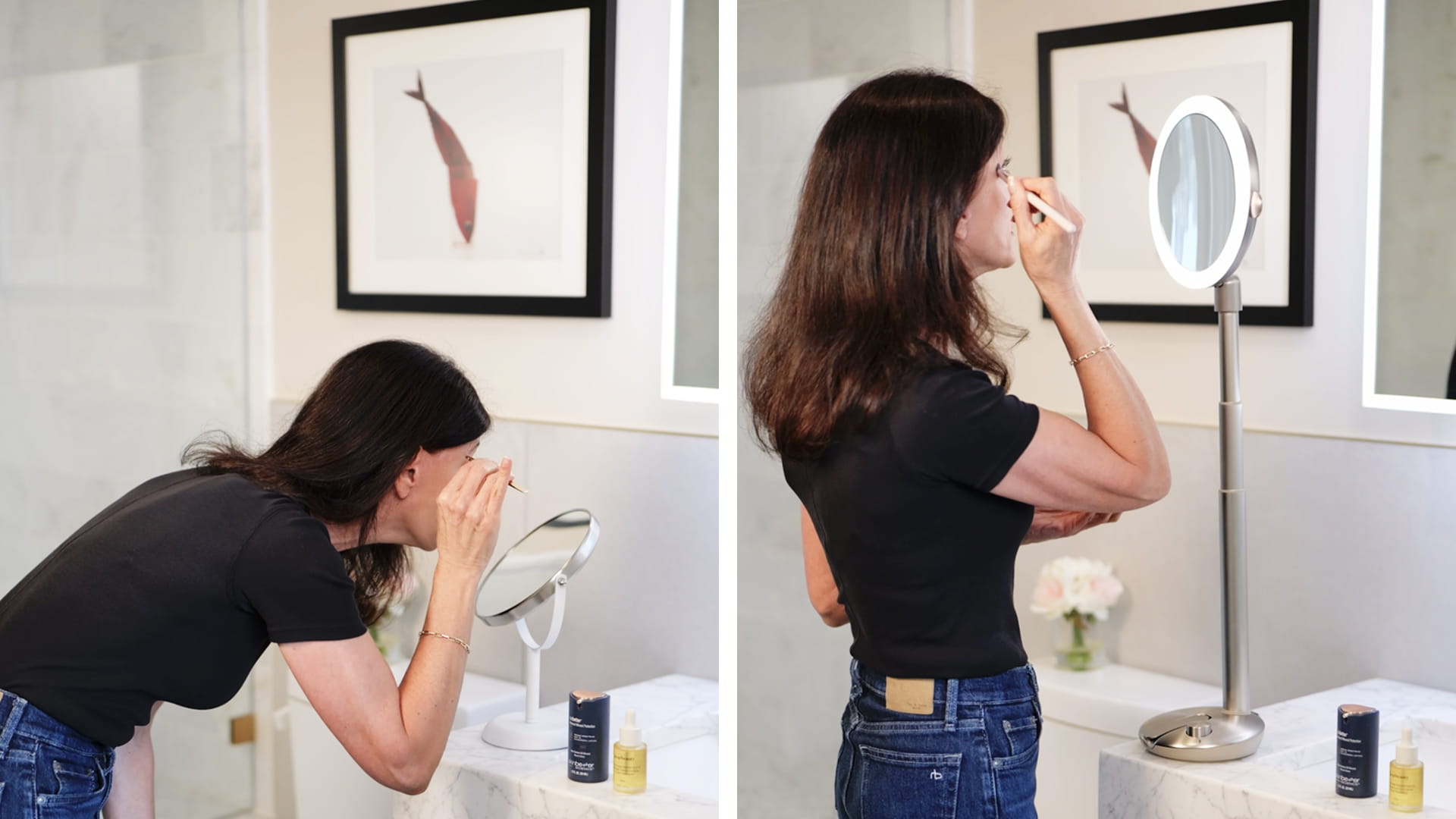
Like curiosity and connection, creativity is a practice you have to exercise. Here are my five tips for how to stimulate your own creative thinking:
1. Brain dump: Create space in your mind for creative thoughts to flow by spending a few minutes writing out everything that’s running through your head. To-do lists, reminders, thoughts you need to get down. Clear your mental clutter before you turn to ideation.
2. Change your environment: When I feel stuck for inspiration, I seek out a change of scenery. A walk around the block or putting pen to paper at a local coffee shop can often be just the thing for getting those creative juices flowing.
3. Unplug: Resist the urge to scroll at all costs. Take the phone with you to trick your mind, but don’t reach for it. Let it rest in your bag or pocket. Boredom is your friend! Even if it starts with staring at the wall for a while, making space in your brain to daydream is essential.
4. 10 minutes: Set a timer if you need to and commit to a few minutes each day to practice a non-work-related creative activity. Sketching, crafting, listening to new music, dancing, practicing calligraphy. Whatever pursuit calls to you, reach for it, and squeeze it in. Don’t overthink it; just do it for a few minutes since a little can go a long way.
5. Alternative uses: There is a little game that I like to play that taps into the other side of my brain. Pick an everyday or random object—a paperweight on your desk, a decorative glass object, a semi-precious stone, a cup, a cotton swab–and list as many non-traditional uses you can think of for it in two minutes. It’s a silly trick that trains that creative muscle!

I am convinced that your world opens up when you begin to prioritize creativity. You start to see things through a different lens—brighter and filled with possibility. I’m typically a person of reason and data, yet I’ve decided that creativity is important to me, so I live my life allowing for this. I’m open to an “internal” feeling. If it feels good to me, I explore it and share it with others. Perhaps it’s one way that I manage my urge for control. Do it for yourself, not for any desired outcome, and you may be surprised by what this shift in your thinking can become.